I'm Open Sourcing GMG AI Agent: A ServiceNow AI Agent You Stay in Control Of
By Chris Gatlin, Founder, GMG Technology (gmgtechllc.com)
The core of GMG AI Agent is now open source. Apache 2.0, on GitHub.
No slides. Below are real screenshots from a test instance, so you can see exactly how it behaves.
Code: github.com/cgatlin08/gmg-ai-agent-for-servicenow
Quick recap
If you're new here, GMG AI Agent is a bring-your-own-LLM agent that runs inside ServiceNow as a scoped app (scope x_gmg_ai). You open a record, open the floating panel, and ask it something in plain words.
I built it with a team using Cursor and Grok Bot. I've been building it in public, and now I'm handing the core to anyone who wants to run it, read it or improve it.
I wrote about where it started here: What an Open, Bring-Your-Own-LLM Agent on ServiceNow Can Look Like.
Why I built it this way
Every time I talk with someone about AI in ServiceNow, two questions come up first.
What is this going to cost us?
And who controls what it changes?
Fair questions. So I built the agent around those two answers first, and the features second.
It knows the page you're on
I opened an incident about a shared folder and asked the panel for help. It answered using the record's own fields, laid out next steps, and pointed out possibly related incidents.
Then it offered to propose a work note. It asked first.
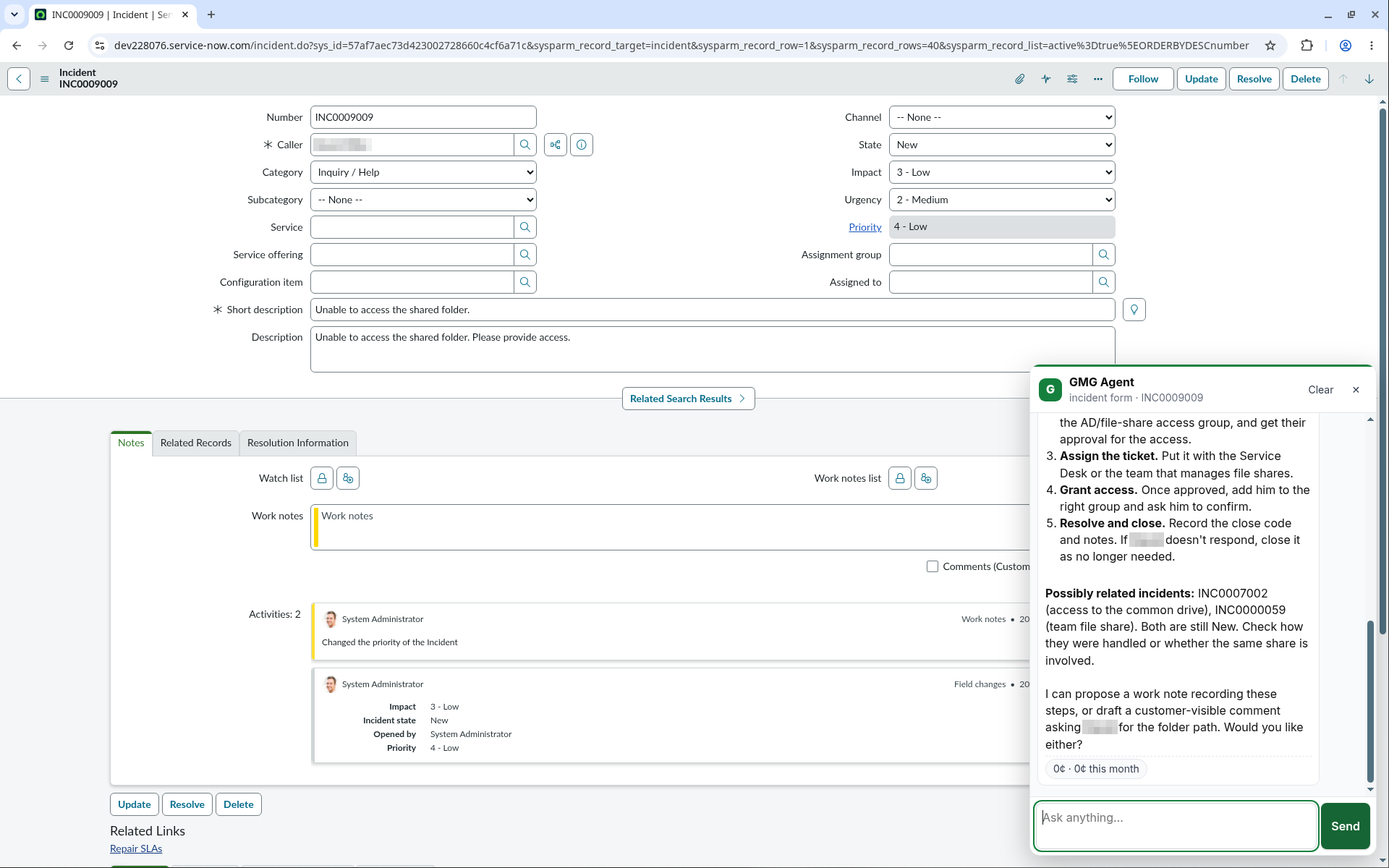
It reads any record you can see. It changes only the record you have open.
It proposes, you decide
Next I opened a script include and asked it to add a method. It didn't touch the script. It showed me a diff card with the proposed lines and the update set it would use.
Because the script is active, the card says it in plain words: "Live change. This script is active. Your change goes live when you confirm."
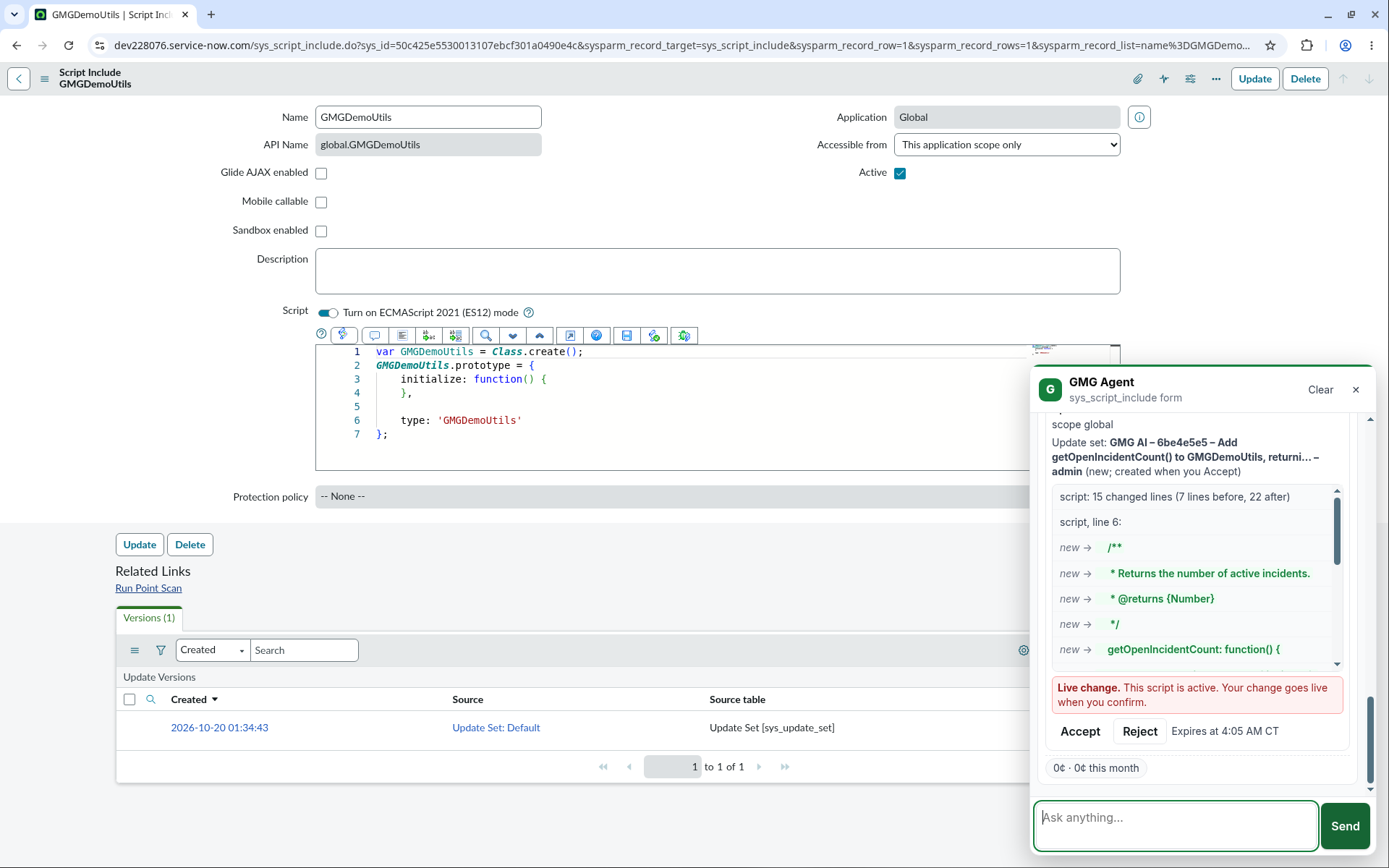
This is the part I care about most. Nothing is written until a person clicks Accept, and that check happens on the server, not in the prompt.
One click, saved and tracked
I clicked Accept. The new method was saved into the script, and the panel confirmed it was applied in its own GMG AI update set.
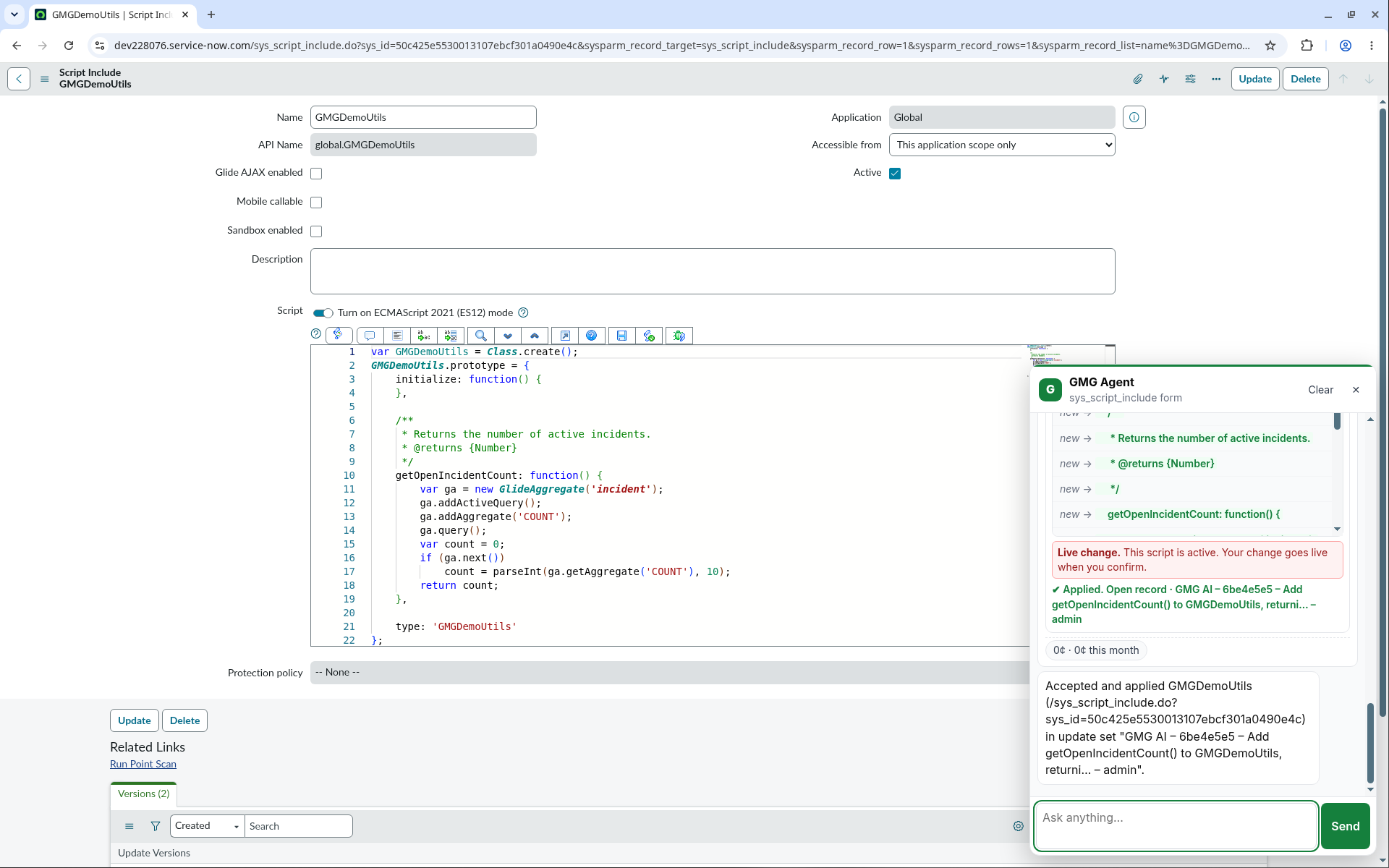
I want to be clear about the update set part. It records the change. It doesn't hold it back. So review the diff, and test in a sub-production instance first.
Regular users, same rules
In testing, I signed in as a regular ITIL user, no admin, and asked for a work note on an incident. Same flow: a card showing the exact note, and Accept or Reject.
The card is honest about this one too. A work note is a journal entry, so it's written straight to the record, not captured in an update set, and it can't be edited or removed afterwards.
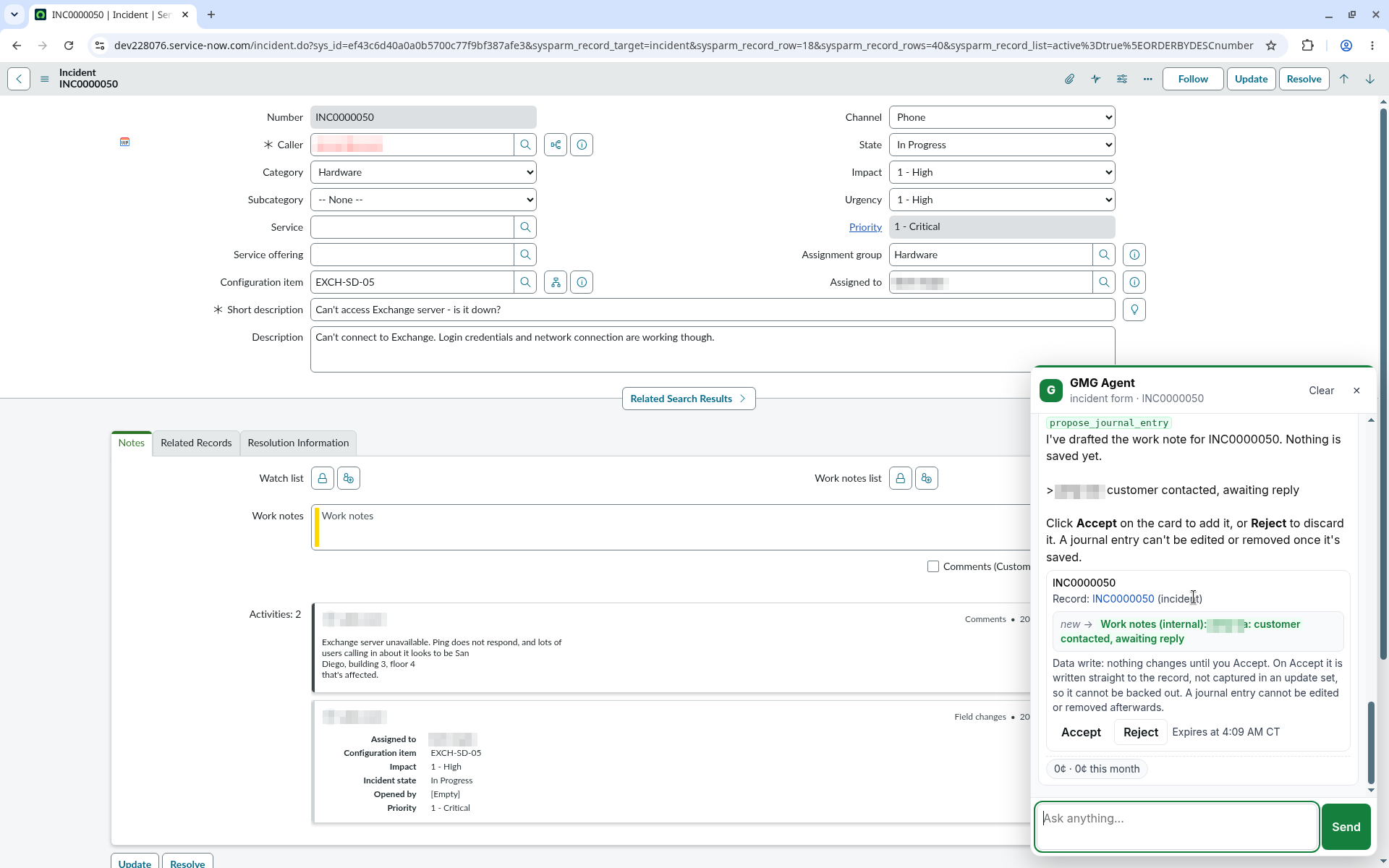
The agent writes as you, under your own ACLs. If you can't edit a field, neither can it.
Locked out of the settings
That same regular user tried to open the agent's Providers list. ServiceNow blocked the page.

Some tables are off limits. The agent is blocked from changing ACL and role tables, even when one of them is the record you have open.
It knows when to say no
Then the user asked it to create a new catalog item. It politely said Plan & Create isn't enabled here, and offered to help once the item exists.
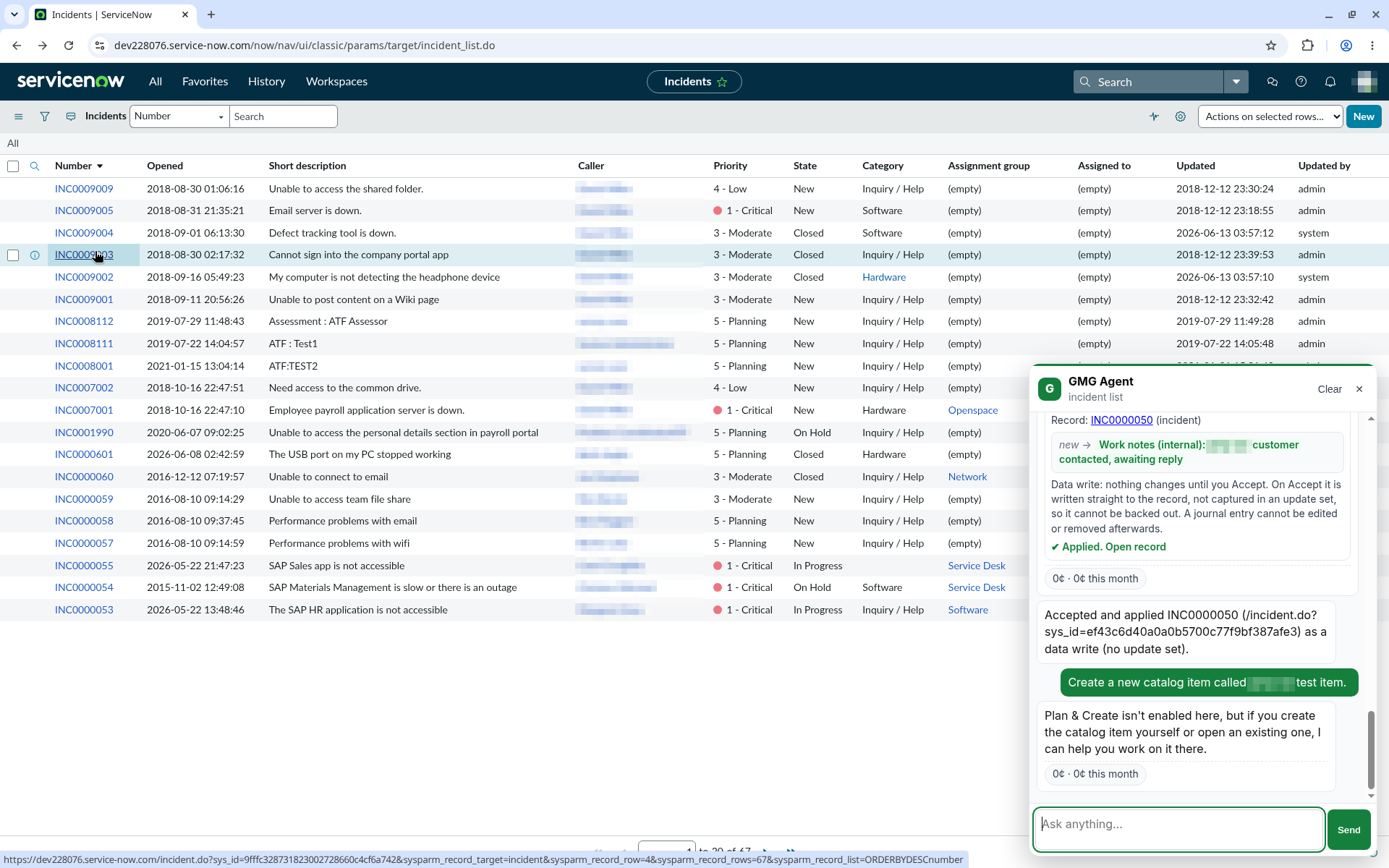
The open-source core stays focused on one record at a time. That's on purpose.
Your LLM, your cap
You bring your own model. It works with Anthropic or any OpenAI-compatible endpoint, so the bill goes to your account with your provider. It doesn't call Now Assist.
There are daily, monthly and per-user daily spend caps that stop new AI calls once they're reached. They're off until an admin sets them, so set them before you roll it out.
Your data
The agent runs inside your instance. When you ask it something, the request and the record data it reads go from your instance to the AI provider you configured. GMG Technology doesn't receive, store or see that data. Check that your agreement with your provider covers the data you'll point it at.
Why open source
I want people to actually use this, look under the hood, and tell me what's wrong with it. Apache 2.0 makes that easy. Install it on a developer instance, read every line, fork it.
It's provided as is, without warranties, per the Apache 2.0 license.
Oh, by the way
Bigger work, like multi-record builds, catalog items and flows, is planned for GMG Plan & Create (in development), which I'm building on top of this same open-source core. Here's a sneak peek.
I typed one sentence describing what I wanted built.
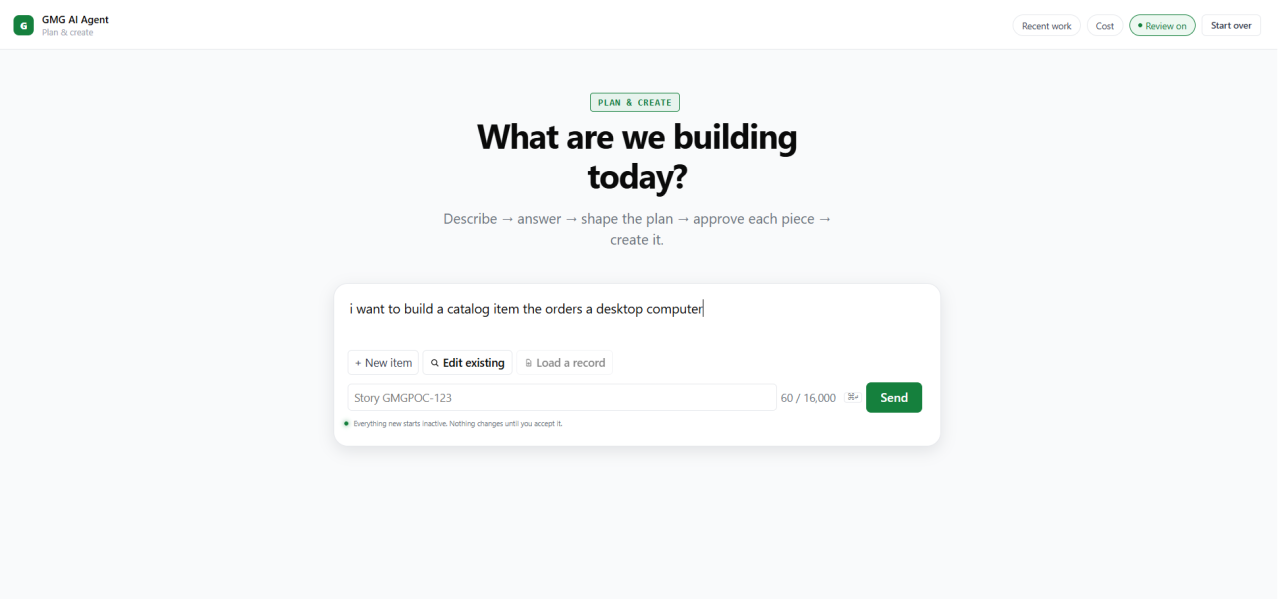
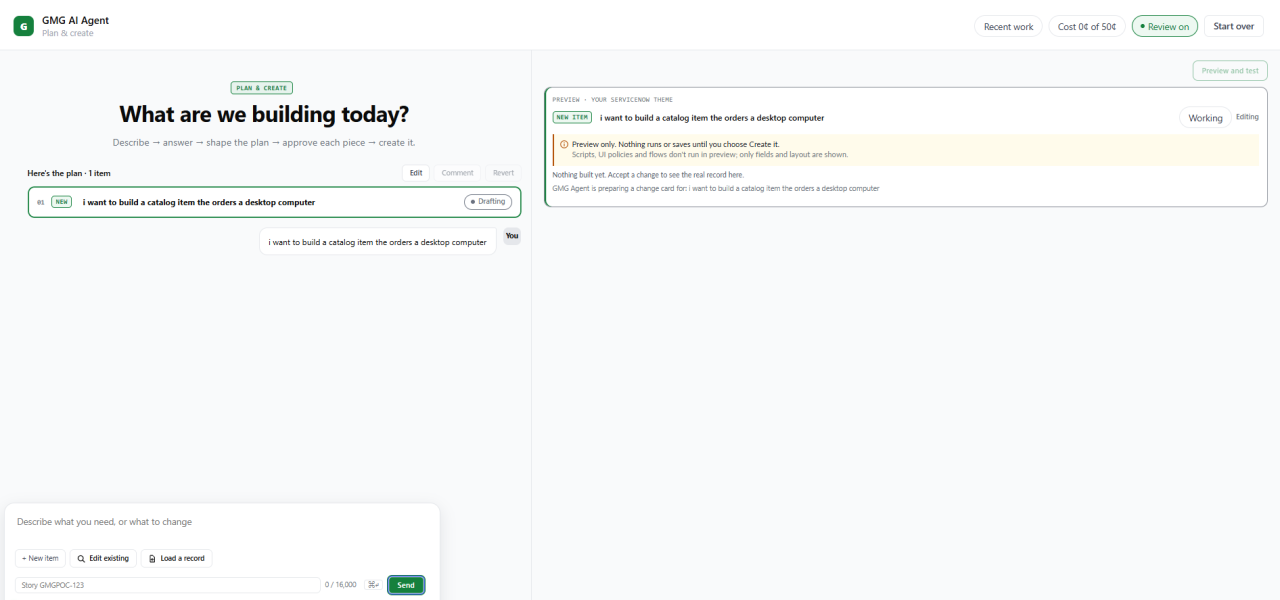
It planned the work and started drafting it.
Then it showed me a catalog item preview, waiting for my OK before anything was created.
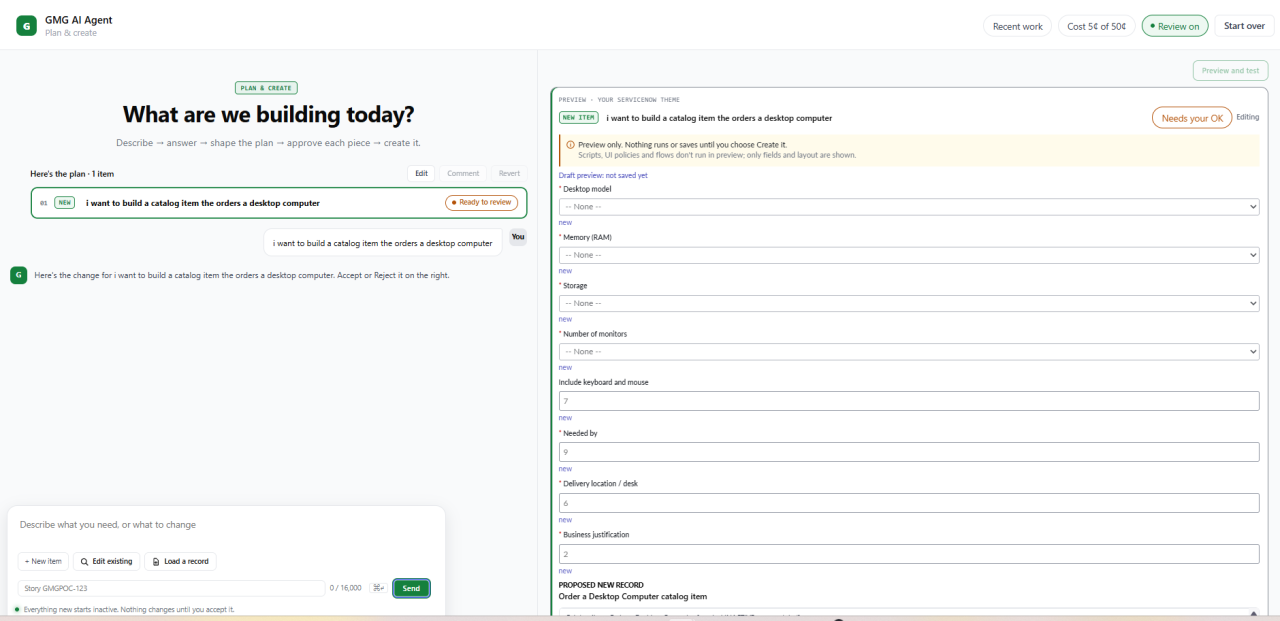
Catalog items work today. Scripts, business rules and flows are in progress.
More to come.
Your turn
Code and install steps: github.com/cgatlin08/gmg-ai-agent-for-servicenow
Your LLM. Your key. Every change confirmed by a person.
Would your team try it? Tell me what you'd want it to do first. Reach out on LinkedIn, open an issue on GitHub, or reach me through GMG Technology at gmgtechllc.com.
ServiceNow and Now Assist are trademarks of ServiceNow, Inc. Anthropic, OpenAI and other names are trademarks of their respective owners. GMG Technology is not affiliated with or endorsed by any of them. Screenshots taken on a test instance with demo data; names blurred.