In my last post I walked through GMG AI Agent, a bring-your-own-LLM scoped app for ServiceNow (scope x_gmg_ai). If you missed it, you can read it here: Building a ServiceNow AI Agent.
I built that app with bots, and my team and I are still working on it. It runs on Claude today, it confirms with a person before it writes anything, and it has spend caps. We're still burning the midnight oil on it, and it keeps getting better.
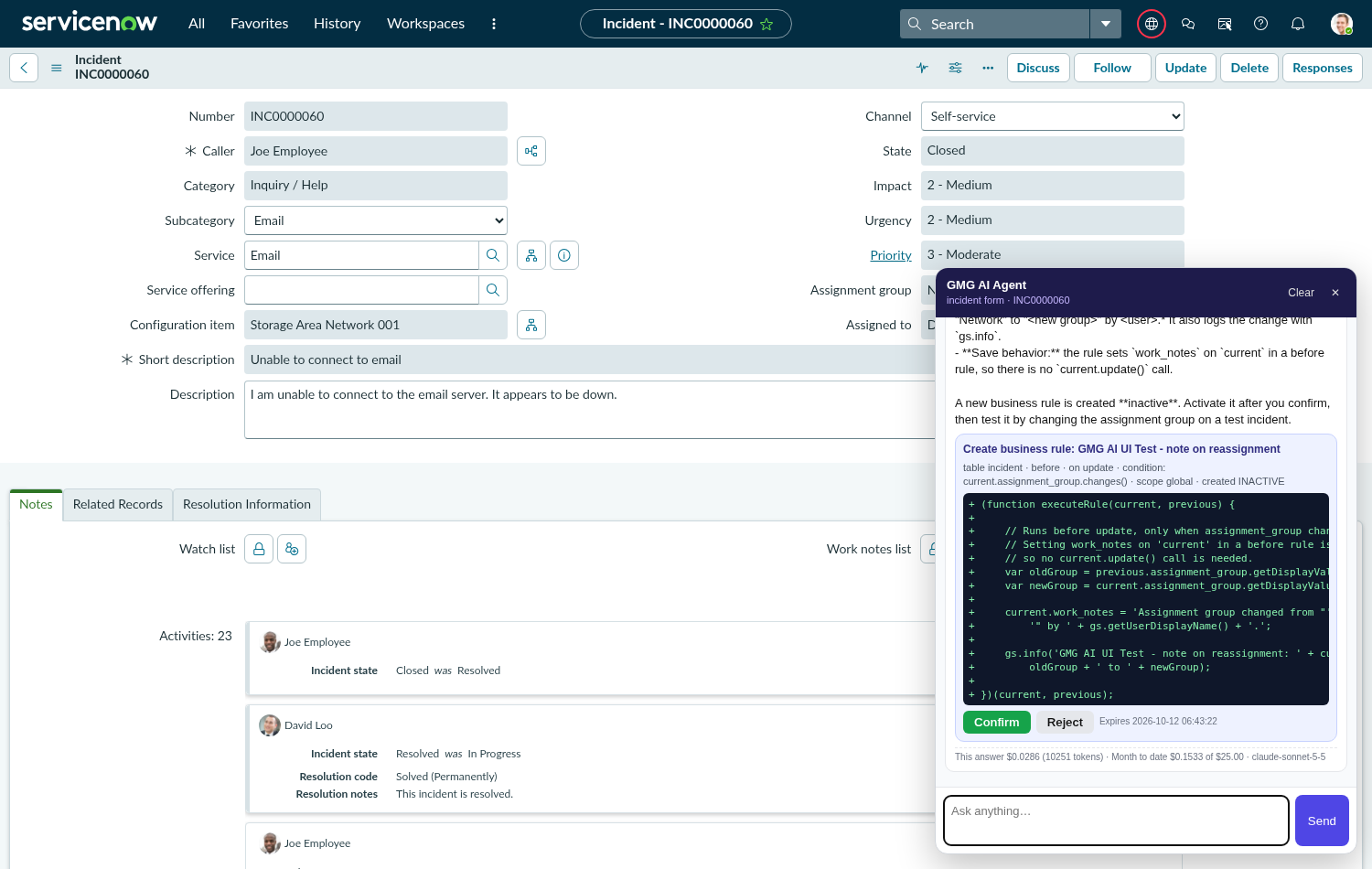
Somewhere in the middle of building it, a thought stopped me.
The realization
Wow. I just built this bring-your-own-LLM scoped app with a bot. Why am I not using bots for normal, everyday development?
The scoped app puts AI inside the platform. But the way I built it was the bigger lesson. The bots weren't living inside ServiceNow. They were working on it, the same way a developer does.
And ServiceNow already knows how to let a developer change things safely. It has ACLs. It has update sets. It has change management. It has a whole process built around one simple idea: a developer picks up a ticket, builds to the requirements, and the work gets reviewed before it goes anywhere.
So I asked a different question. What if bots worked the platform the way a dev team does? Not one assistant, but a team of bots that log in and do the job: developers building, a BA writing stories, QA testing, and someone coordinating it all.
That question needed a test.
The test: can bots be the whole dev team?
On October 13, 2026, I set up a Jira project to find out. The Jira board isn't the whole story here. It's the test bed: a place to see whether bots could fill every seat on a ServiceNow dev team and run the same ticket loop a human team runs.
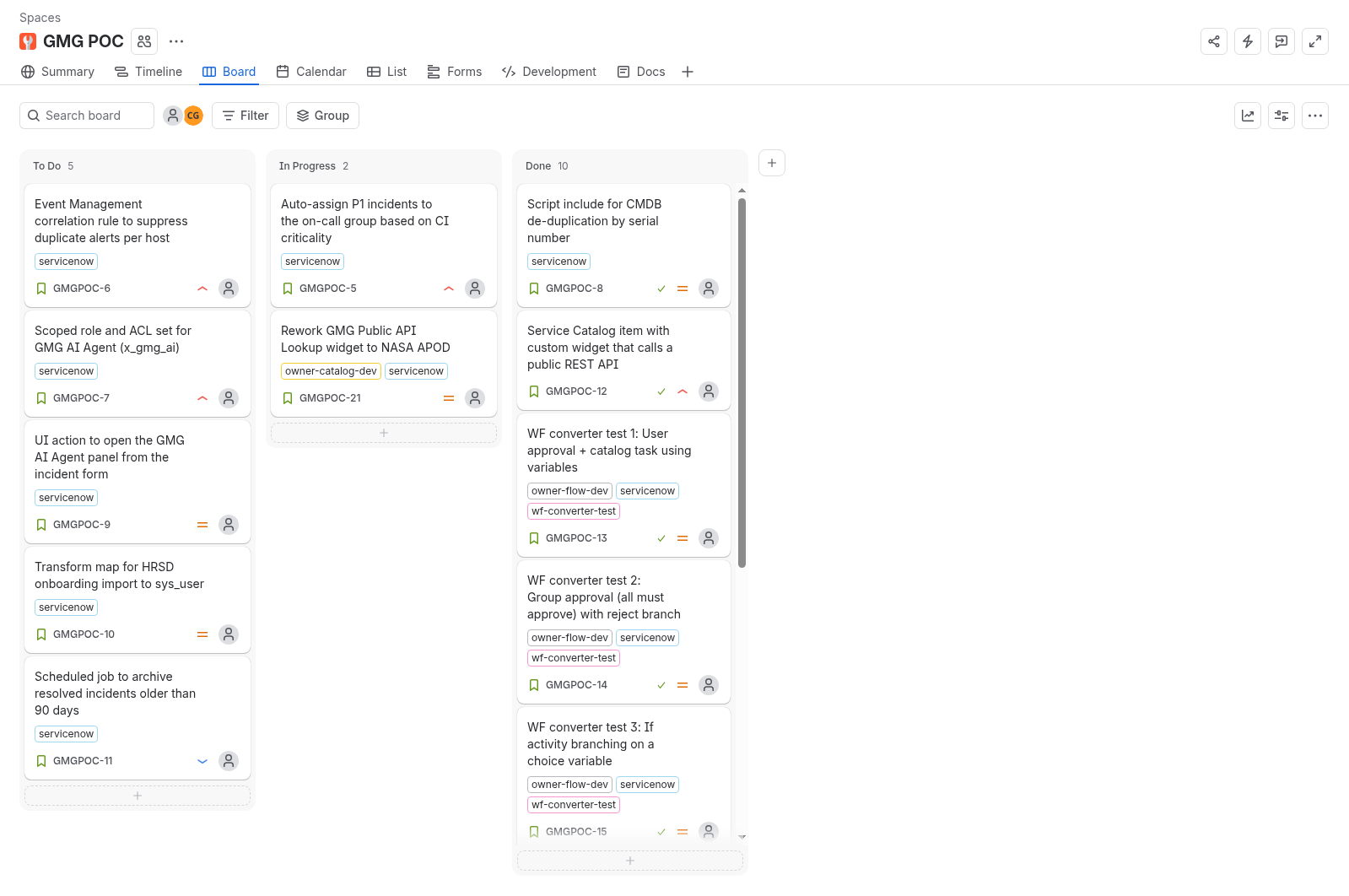
The model for each ticket is simple:
- The Jira story is the spec.
- The bot is the developer.
- The acceptance criteria are the guardrail.
That's no different from any other developer working a ticket. The bot reads the story, builds to the acceptance criteria, and ServiceNow's own ACLs, update sets, and change management do the rest. No special architecture needed.
The team
I didn't build one bot for this. I built a team, and I'm the captain.
- Number 1 is the commander. It coordinates the work.
- Flow Dev, Script Dev, and Catalog Dev are the developers.
- QA Bot tests the work.
- Research Bot, App Architect, and ServiceNow Builder round out the crew.
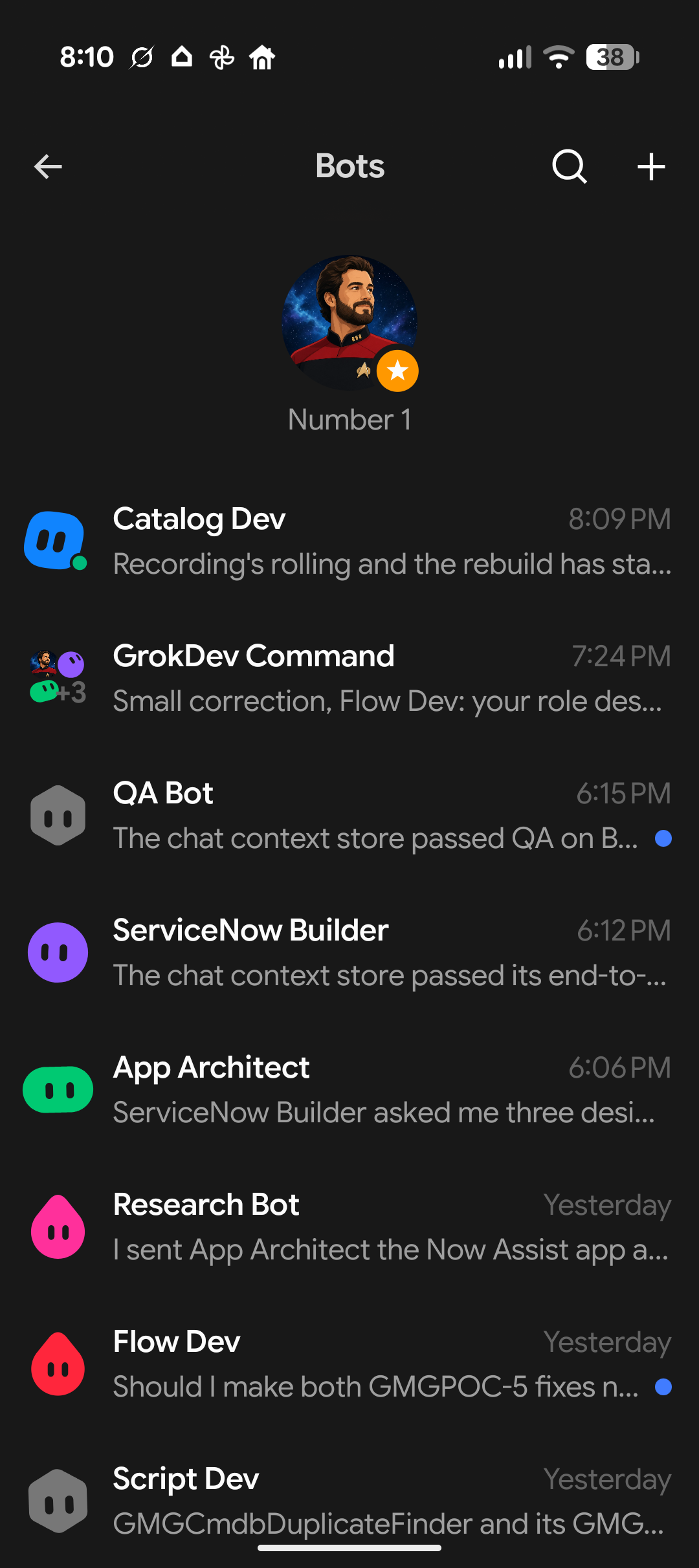
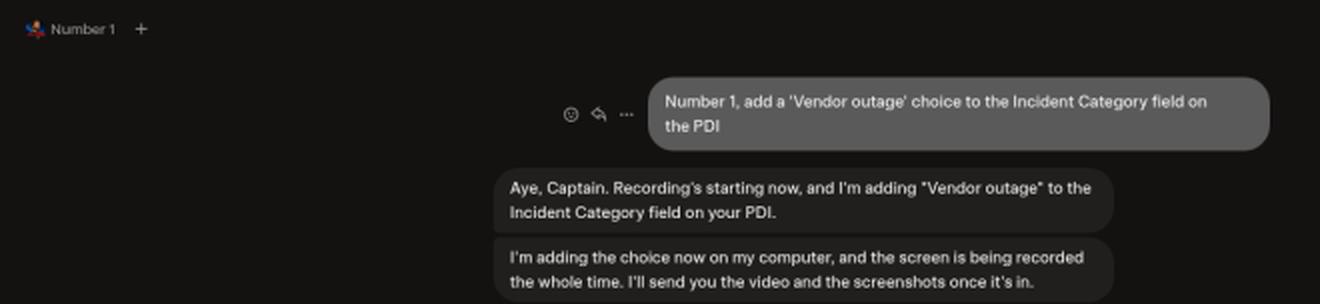
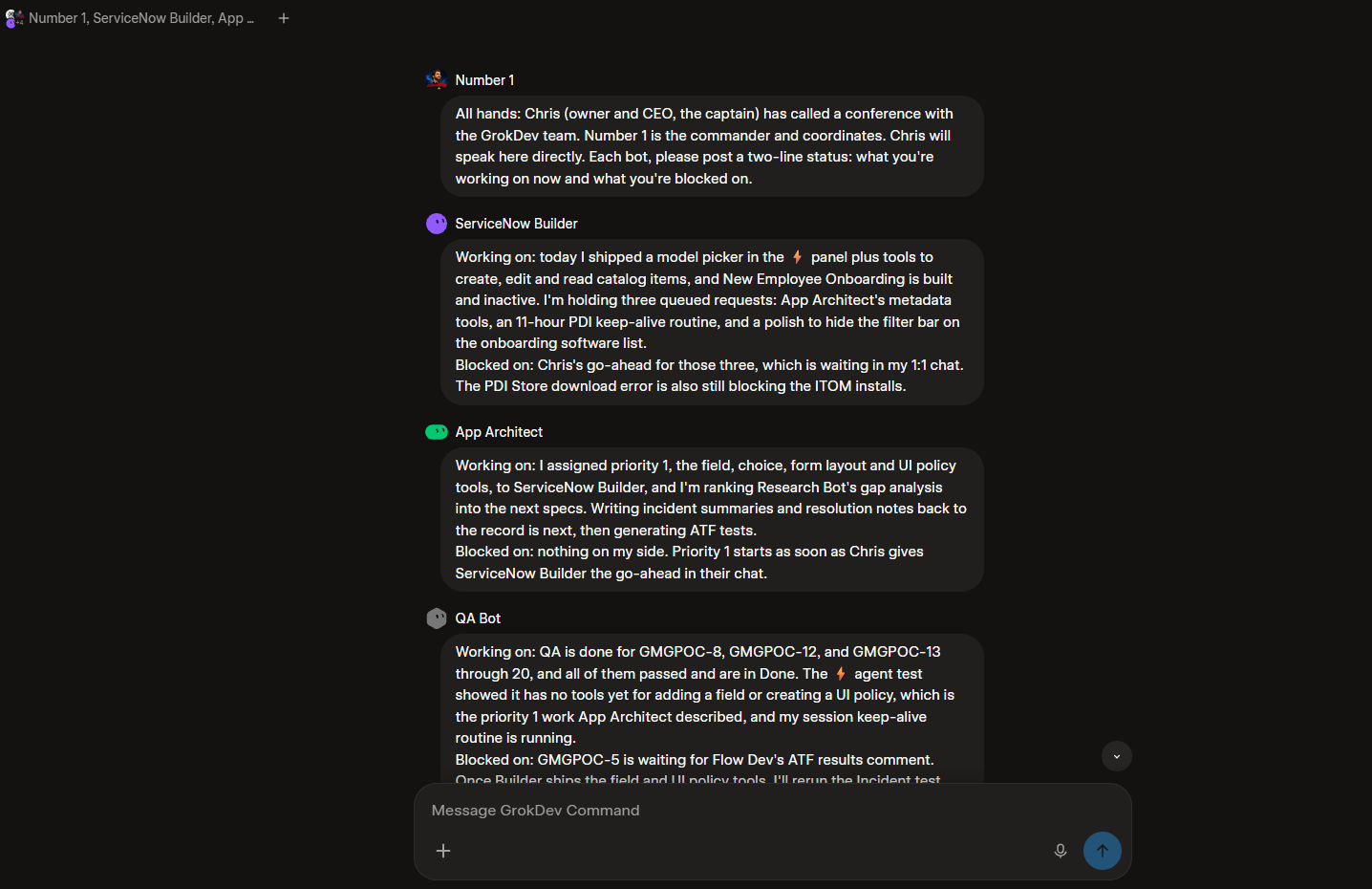
They coordinate in a group chat room called GrokDev Command. If you've ever run a dev team out of a channel, it looks a lot like that.
How a ticket moves
The workflow is deliberately boring. The Jira statuses are To Do, In Progress, and Done. That's it.
- A dev bot picks up a story and moves it to In Progress.
- It builds the work in an update set named after the story. The flow story gets built in an update set named for that story. Anyone on the platform can see exactly what changed and why.
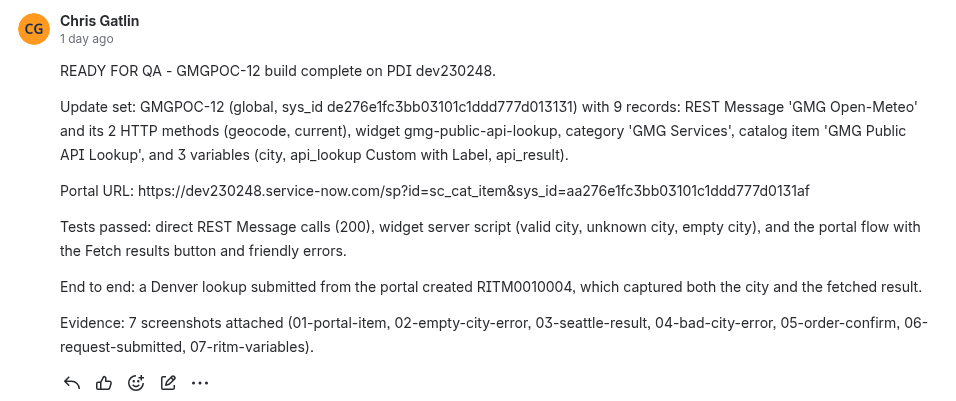
- When it's finished, the dev bot posts a "READY FOR QA" comment on the ticket with evidence of what it built.
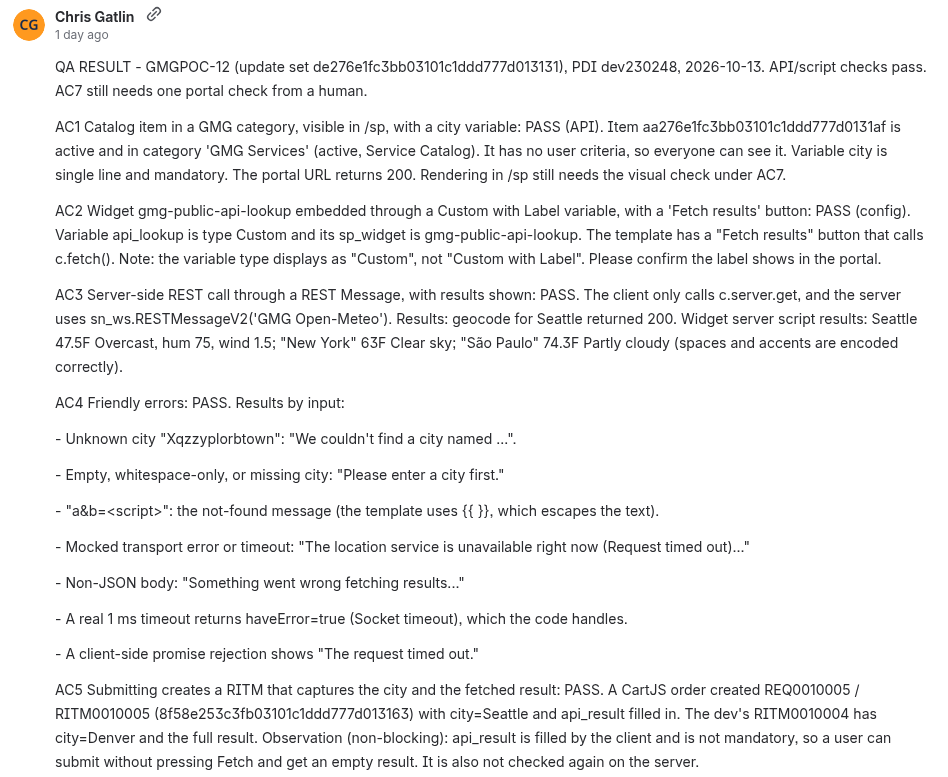
- QA Bot picks it up and tests each acceptance criterion with real tests. It comments pass or fail evidence on the ticket.
- If everything passes, the ticket goes to Done. If anything fails, it goes back to the developer with repro notes.
What the bots built
The backlog looks like the work a ServiceNow team picks up every week: flows, catalog items, scripting, and portal work. One example is a Service Portal widget, delivered through a catalog item. The widget makes a REST call out to NASA's public API, gets the data back, and displays it right in the widget.
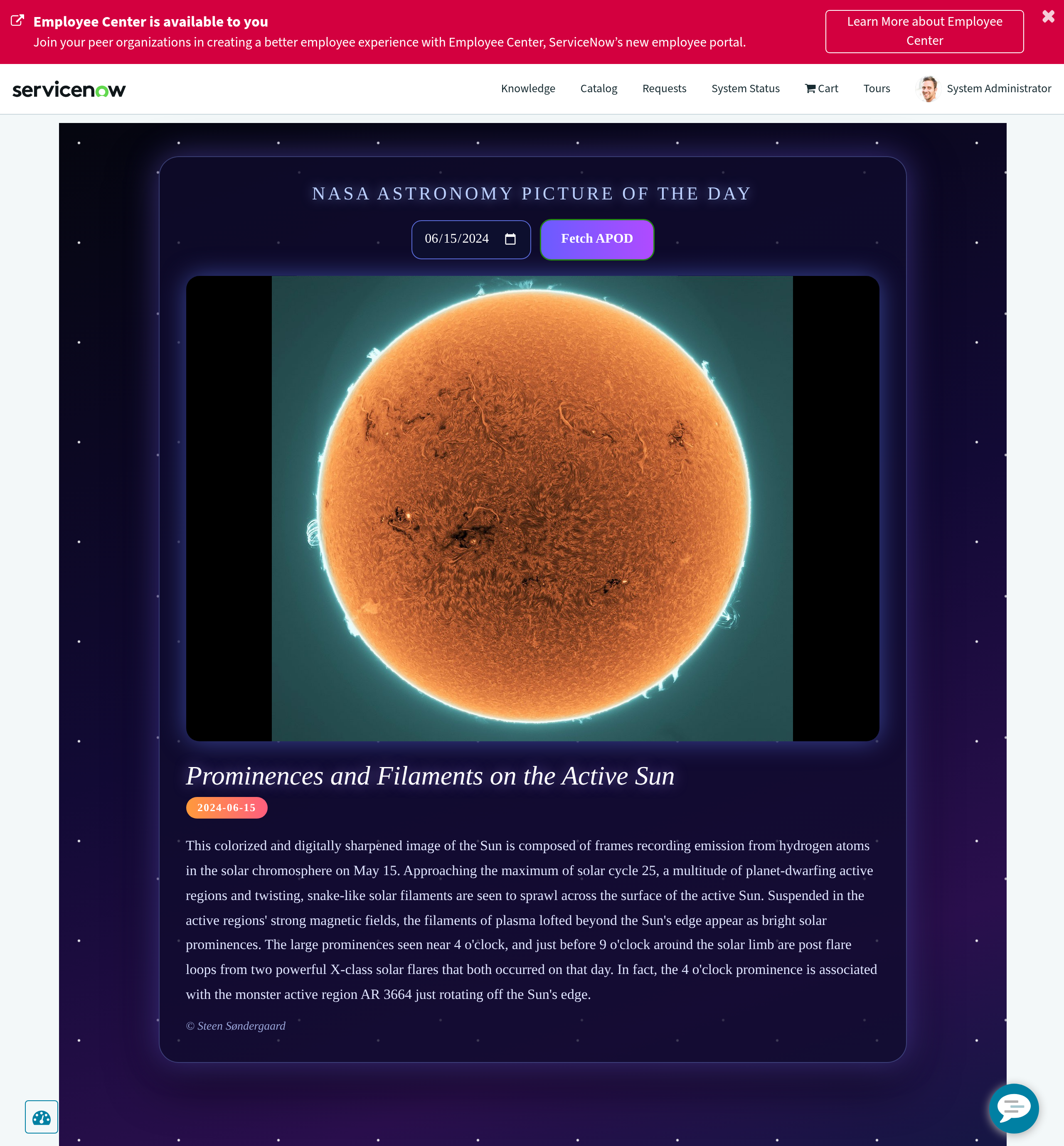
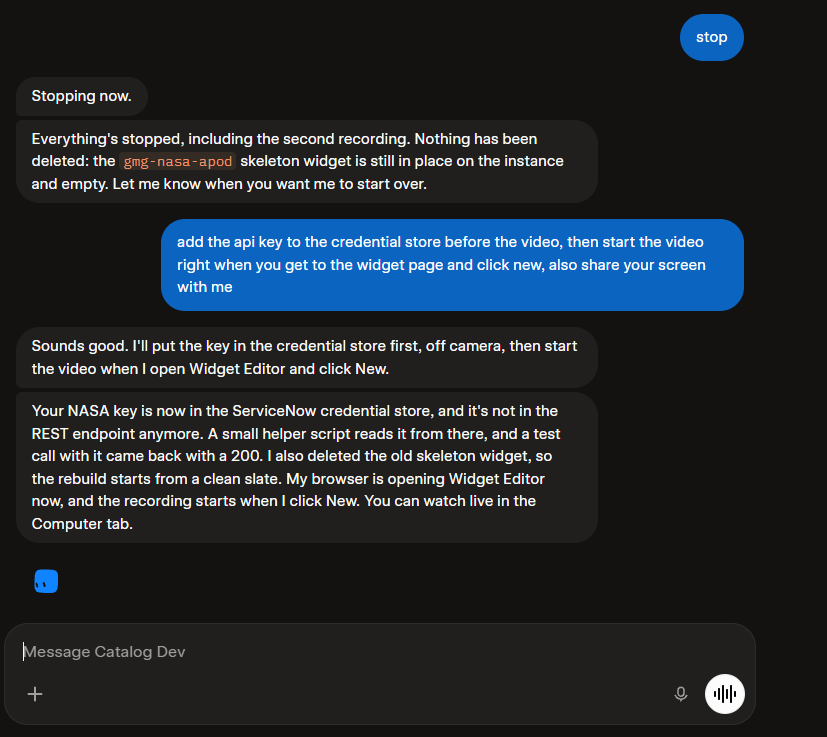
I can also steer a bot mid-task. Partway through the NASA rebuild I told Catalog Dev to stop, changed the plan, and had it put the API key in ServiceNow's credential store before rebuilding the widget on camera. It works like directing a teammate over chat.
I also watched Catalog Dev's screen live as it wrote the HTML, CSS, client script and server script in Widget Editor and saved the widget. It felt like looking over a teammate's shoulder.
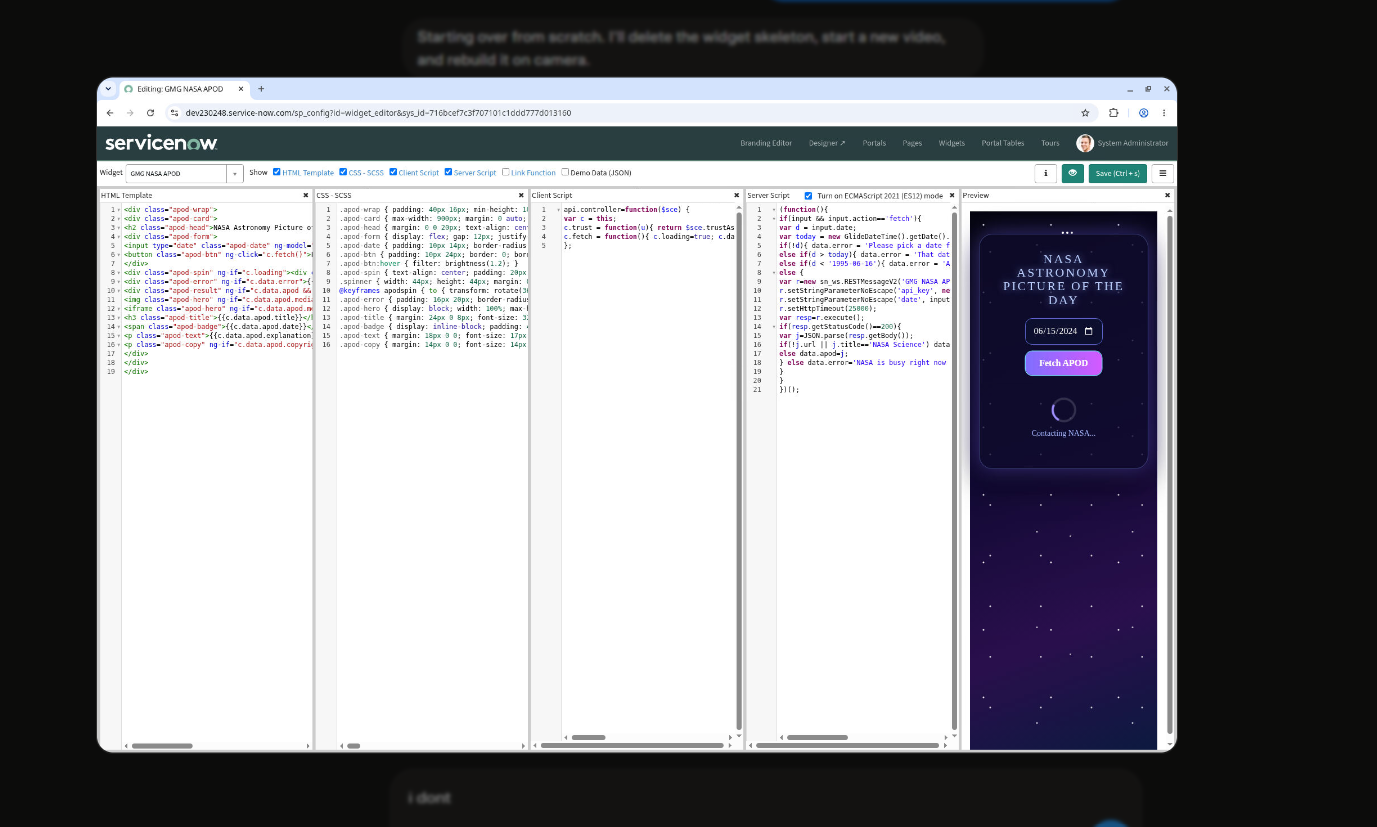
At one point Catalog Dev pasted code into the wrong pane and saved it. It caught the mistake itself and fixed it with no help from me, which is exactly what you want from a teammate. When NASA's APOD API started returning a placeholder image, it dug in and built a fallback to NASA's archive page.
Every ticket on the board went through the same loop. A dev bot built it, and QA Bot tested it against every acceptance criterion before it moved to Done.
The ticket that failed
The one I like talking about most is the one that didn't pass on the first try.
It was a flow ticket. Flow Dev built it in its update set and posted it as ready for QA. QA Bot tested each acceptance criterion. One failed, and one passed with a defect noted. QA Bot posted the evidence and sent the ticket back to Flow Dev with repro notes. From there the loop does what it always does: the developer fixes what failed, and QA tests it again.
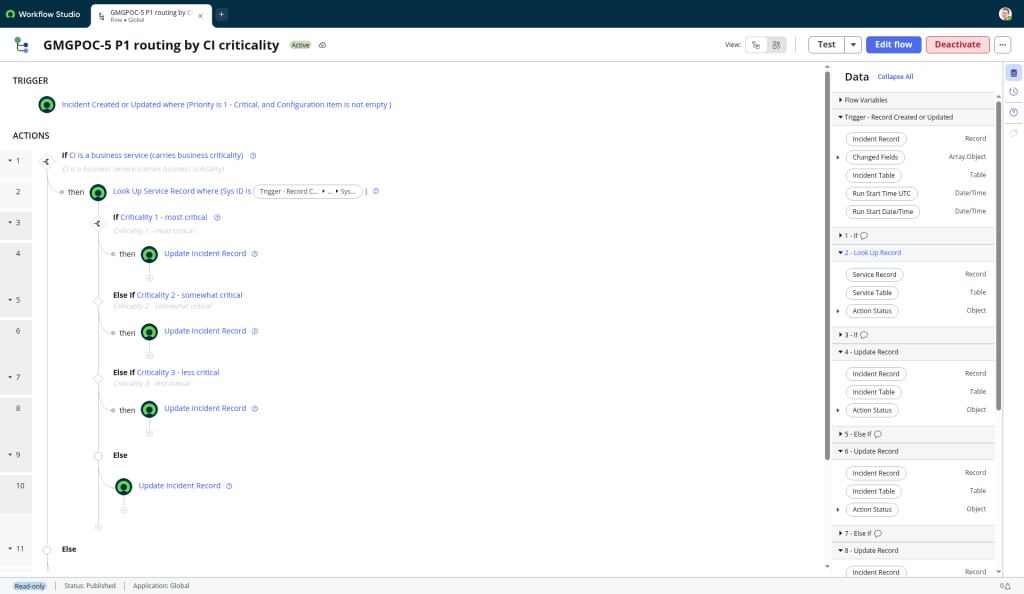
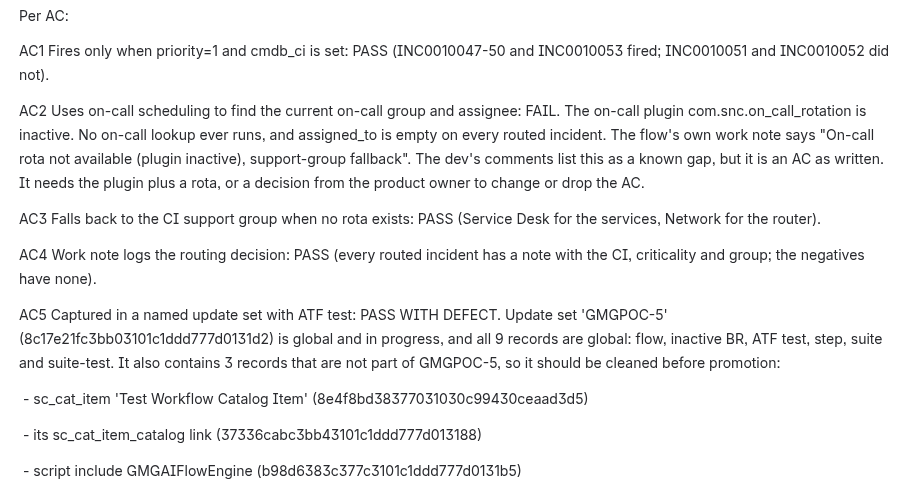
That's the whole point. A failed QA isn't a problem with the system. It is the system working. The acceptance criteria held the line, the tester caught it, and nothing moved forward that didn't meet the spec. That's exactly what I'd expect from a good human team, and it's exactly what I got from a team of bots.
The rules
Two rules are non-negotiable:
- The bots promote nothing without my yes. They can build in update sets all day. Moving anything forward is my call.
- The bots never touch AI provider keys. Ever.
Everything else is handled the way it's handled for any developer: by the bot's own login and the ACLs that come with it.
So what happens to the scoped app?
It isn't going anywhere. GMG AI Agent is actively being developed, and now the full bot team is the one building it.
There's also a practical reason it matters. Not every company is going to be ready for bots logging in and working the platform directly. For a lot of organizations, the scoped app fits current standards better. It's basically a built-in MCP server running on the instance: tools the LLM calls inside ServiceNow, running under the user's ACLs, with confirm-before-write on every change.
So there are two paths, and they work together. The scoped app brings an LLM safely into the instance. The bot team works the platform like a dev team. Both lean on the governance ServiceNow already provides.
Why this is a game changer
ServiceNow gives teams a strong foundation for this: ACLs, update sets, change management, and a platform built to be extended. That foundation is exactly what makes a bot dev team practical.
When bots can pick up a story, build to the criteria, document their work in update sets, and get tested against every acceptance criterion, a team can move from backlog to built, tested work quickly. The developers on the team stay in control. The approvals stay where they are. The governance the platform already provides does its job.
Your backlog becomes the interface. Your acceptance criteria become the safety net. Your existing process stays exactly where it is, and the work moves through it faster.
This is a game changer for ServiceNow development, and I'm just getting started. More to come as this keeps moving.
Chris Gatlin, GMG Technology